
In August 2024, we received an Invitation to Bid for accessibility improvements in Dartmouth, Nova Scotia . The inspection had already been completed, and the need was clear: safe, reliable wheelchair access to the home .
The scope was straightforward but important. Build a complete ramp with a 6-foot square landing, a 1:12 slope, 42-inch width, and a minimum of 36 inches of clearance between handrails. Remove and dispose of all debris. Do it properly. Do it safely. Do it to code.
But projects like this are never just about measurements.

Every single one of us begins life needing accessibility. We all pass through the stroller stage. Someone pushed us up ramps, through doorways, across thresholds. Accessibility is not a special feature for a small group of people. It’s something we’ve all depended on.
And many of us will depend on it again.
Age, injury, surgery, illness, accidents. Mobility can change quickly. A single step at the front door can become a barrier. What once felt minor becomes the difference between independence and dependence.
That’s why accessible home design in Halifax and across Nova Scotia isn’t an upgrade. It’s an investment in dignity, safety, and long-term comfort. A well-built ramp is not just lumber and fasteners. It’s freedom of movement. It’s peace of mind for families. It’s the ability to enter and leave your own home without assistance.


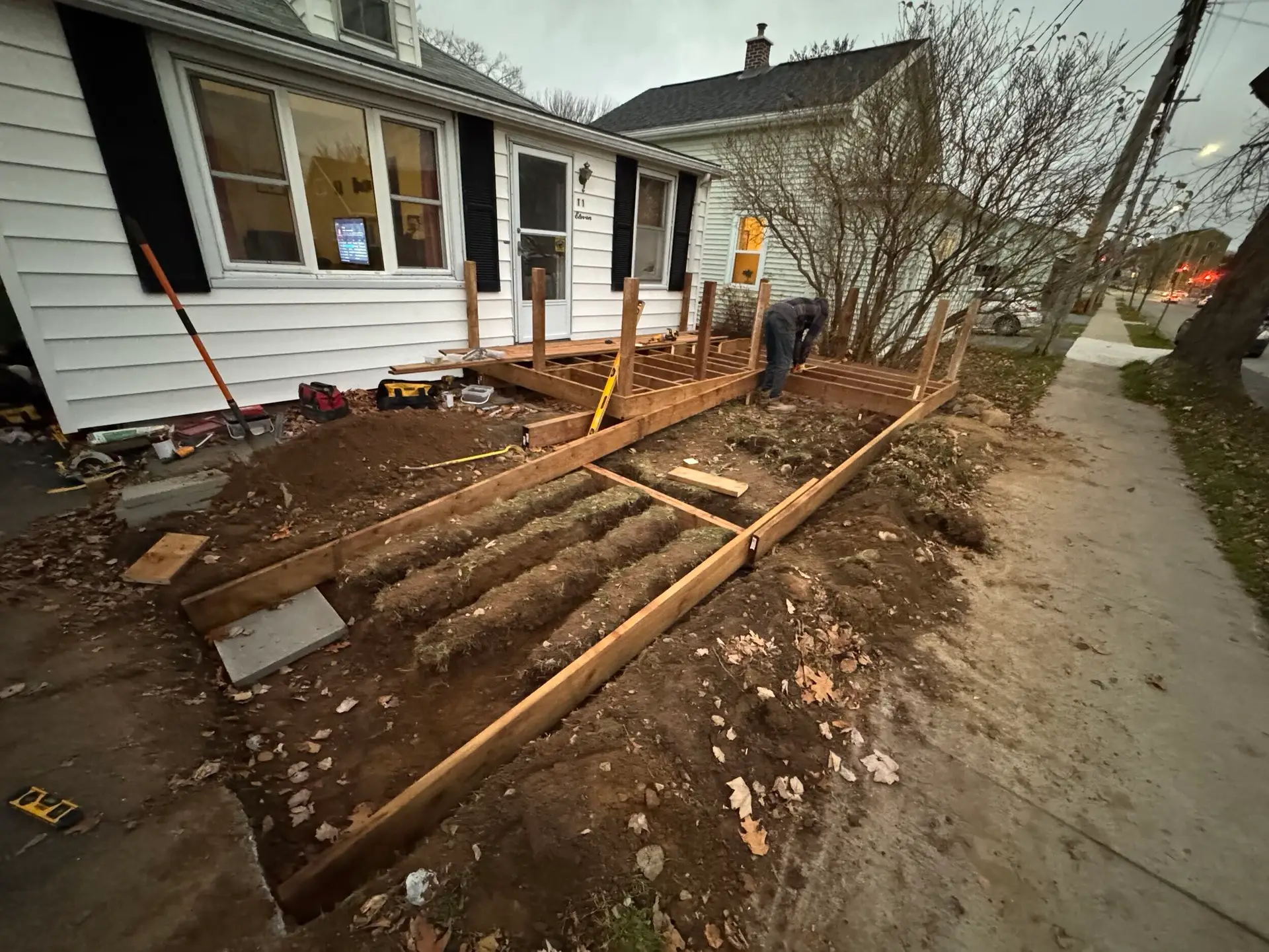

This project came with another challenge. The work was scheduled for November. In Nova Scotia, that means watching the weather closely. Once snow falls and temperatures drop, excavation and exterior construction become significantly more difficult. The window was tight.
We moved quickly.
Materials were ordered without delay. The site was prepared efficiently. The framing went up fast but carefully, maintaining the required slope and landing dimensions. Handrails were installed with proper clearance. Every detail was checked twice.
And we finished before the snow arrived.
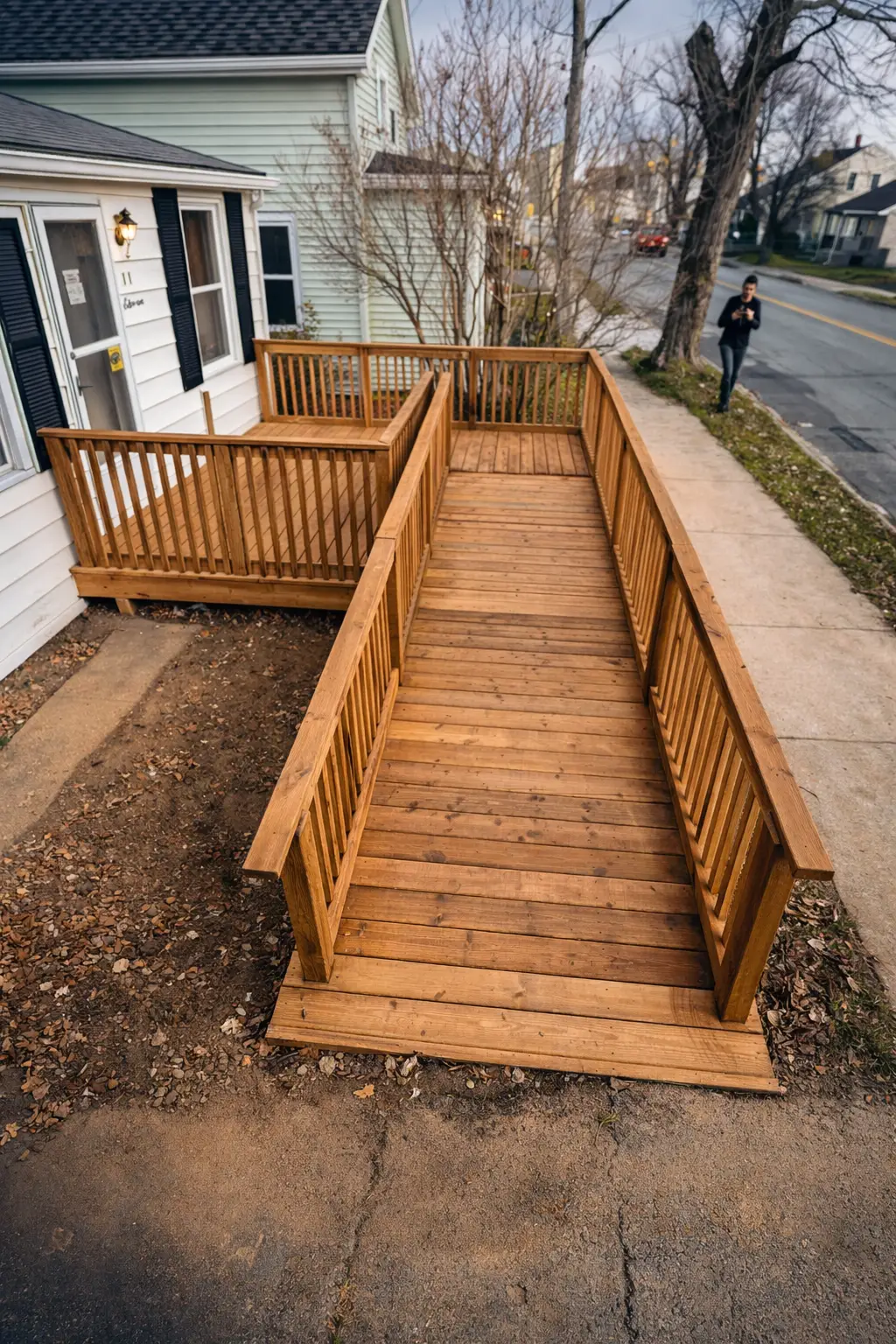
What stands now is more than a ramp. It’s a reminder that accessibility should be part of the conversation long before it becomes urgent. Good design anticipates change. Good homes evolve with the people who live in them.
Accessible design is not about reacting to limitation. It’s about planning for life.